Getting Started with Character Design
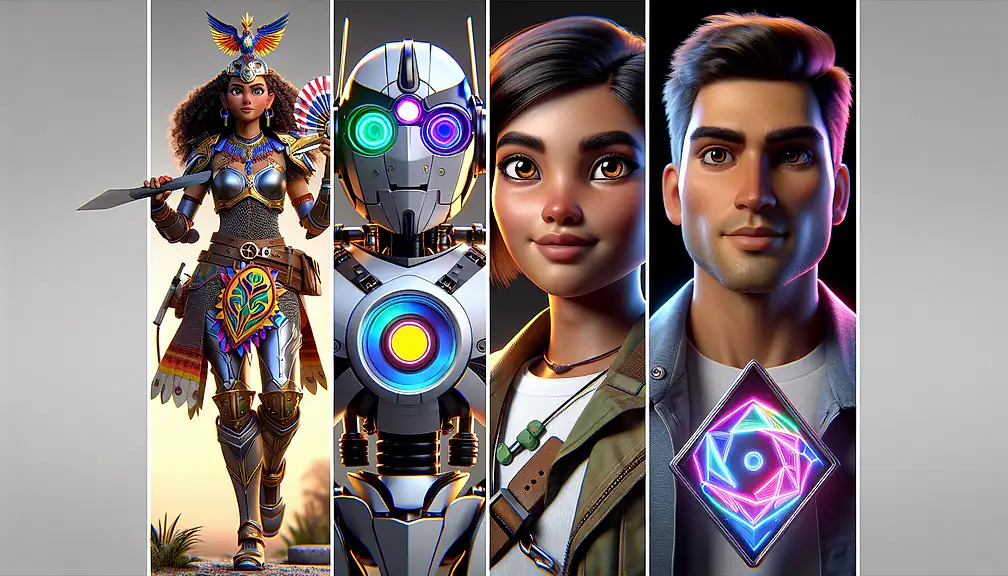
Before we jump into creating characters, let's understand what makes a great character design. Think of your favorite characters from movies or games - they're memorable because they have unique features, clear personalities, and consistent styles.
- • Good character design tells a story
- • Every detail should have a purpose
- • Consistency is key - your character should look like themselves from every angle
- • The design should match the character's personality
Creating Your First Character
Let's start by creating some basic characters. We'll begin with simple prompts and make them better step by step.
Basic Character Prompts:

Simple: 'a warrior'
Better: 'a female warrior with armor'
Best: 'a confident female warrior wearing medieval leather armor, long braided red hair, battle-scarred face, determined expression, holding a glowing sword, digital art style'

Simple: 'a robot'
Better: 'a friendly-looking robot'
Best: 'a small, friendly maintenance robot with round glowing blue eyes, smooth white plastic exterior, extendable arms, and tiny wheels for feet, Pixar animation style'
Adding Personality Through Details
- • Facial features: 'kind eyes, gentle smile, worried expression'
- • Clothing style: 'torn jeans and band t-shirt, punk rock style'
- • Poses: 'confident stance, hands on hips, chin up'
- • Props: 'carrying a magic staff, wearing a backpack full of gadgets'
Different Character Styles
You can create characters in many different styles. Let's try the same character idea in different styles!
Base Character: 'Young female explorer'

Anime Style:
'Young female explorer, anime art style, big expressive eyes, colorful short hair with hair clips, wearing a practical adventure outfit with many pockets, energetic pose'

Realistic Style:
'Young female explorer, photorealistic style, natural features, weathered expedition clothing, camera around neck, detailed facial features, documentary photography style'

Cartoon Style:
'Young female explorer, cartoon style, exaggerated expressions, bouncy animation, bright colors, cute design, similar to Disney animation'Character Details That Matter
Outfits and Accessories
- • Clothing: 'wearing a cozy oversized sweater with patches'
- • Accessories: 'steampunk goggles, brass pocket watch'
- • Weapons: 'carrying an ancient crystal sword'
- • Tools: 'belt full of potion bottles and magical ingredients'
Let's design a wizard character with different outfits:

Classic: 'wizard wearing traditional blue robes with silver stars, pointed hat, long white beard'

Modern: 'young wizard in urban streetwear, magical tattoos glowing, wearing enchanted sneakers'

Steampunk: 'wizard engineer wearing brass goggles, Victorian coat with gear patterns, carrying a steam-powered wand'Making Characters Consistent
One of the biggest challenges is making your character look the same in different poses and scenes. Here's how to maintain consistency:
- • Always mention key features: 'character with signature red scarf'
- • Use the same style words: 'maintain anime style, big eyes'
- • Keep color schemes: 'blue hair, purple outfit'
- • Describe personality: 'confident pose, friendly smile'
Example of consistent character in different scenes:

Base design:
'teenage superhero girl, curly purple hair, blue and silver costume, star logo on chest, friendly smile'

Action scene:
'same teenage superhero girl with curly purple hair and star logo, flying through city skyline, blue and silver costume flowing in wind'

Calm scene:
'teenage superhero girl with curly purple hair in casual mode, star logo on t-shirt, sitting in a cafe'
Common Character Design Mistakes
- • Too many details at once → Keep it simple and clear
- • Inconsistent style → Stick to one style per character
- • Vague descriptions → Be specific about important features
- • Forgetting the character's purpose → Design should match their role
Fixing Common Mistakes:

Bad: 'cool awesome amazing warrior hero person with lots of cool stuff'
Good: 'skilled warrior wearing lightweight armor, carrying a distinctive bronze sword, determined expression'

Bad: 'cute but scary but realistic but cartoon monster'
Good: 'cute cartoon monster with playfully spooky features, big eyes, tiny fangs, pastel colors'

Bad: 'character with everything awesome'
Good: 'young inventor character wearing a lab coat, safety goggles, carrying a unique steampunk toolbox'
Conclusion
Creating characters with AI is like building with LEGO blocks - start with the basic shape, then add the fun details! Remember to keep your character consistent, choose a clear style, and most importantly, have fun creating! Save your best prompts, and soon you'll have a whole collection of amazing characters ready for your stories, games, or artwork.