
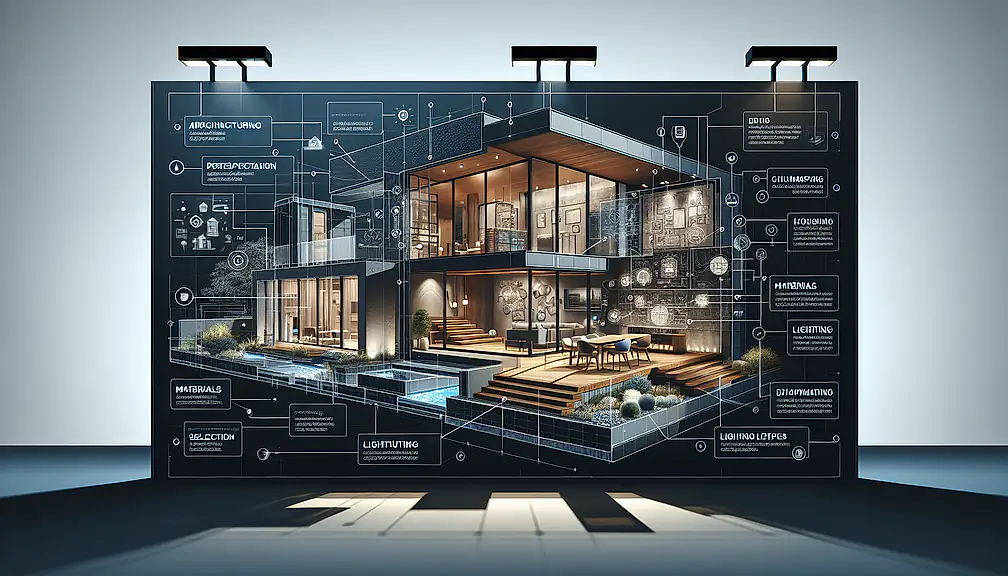
Understanding Architectural Visualization Fundamentals
Before diving into AI generation, it's essential to understand the key elements that make architectural visualizations effective and professional.
- • Scale and Proportion in Architecture
- • Material Representation and Textures
- • Lighting Dynamics and Shadows
- • Camera Angles and Perspectives
- • Context and Environmental Integration
Exterior Visualization Techniques
Creating compelling exterior visualizations requires attention to both architectural details and environmental context.
- • Building Style and Form
- • Material Selection and Texturing
- • Landscape Integration
- • Time of Day and Weather Effects
- • Urban Context and Surroundings
Example exterior prompt:
'Modern residential building exterior, clean geometric forms, floor-to-ceiling windows, natural stone and wood materials, dramatic dusk lighting, professional architectural photography style, surrounded by mature landscaping, ultra-detailed visualization::1.2'
Interior Space Visualization
Interior visualizations focus on spatial experience and material details.
- • Space Planning and Flow
- • Interior Lighting Design
- • Furniture and Decor Placement
- • Material and Finish Details
- • View Integration and Framing
Example interior prompt:
'Contemporary open-plan living space, double-height ceiling, natural light through large windows, minimal furniture arrangement, warm wood floors, white walls, architectural interior photography, ultra-detailed visualization::1.2'
Mastering Lighting for Architecture
- • Natural vs. Artificial Lighting
- • Time of Day Studies
- • Shadow Analysis
- • Interior Light Distribution
- • Mood and Atmosphere Creation
Environmental Integration
Learn how to integrate buildings with their surroundings effectively.
- • Site Context Analysis
- • Landscape Design Integration
- • Weather and Atmospheric Effects
- • Urban Context Relationship
- • Environmental Impact Visualization
Material and Texture Techniques
- • Common Building Materials
- • Material Aging and Weathering
- • Texture Mapping and Details
- • Reflective and Transparent Surfaces
- • Material Combinations and Contrast
Material-focused prompt:
'Close-up architectural detail, showing intersection of concrete, steel, and glass materials, soft natural lighting highlighting texture variations, photorealistic material rendering, professional architectural photography::1.2'
Camera Angles and Composition
- • One-Point and Two-Point Perspectives
- • Bird's Eye and Aerial Views
- • Street-Level Perspectives
- • Interior Vantage Points
- • Detail and Close-up Shots
Advanced Presentation Techniques
- • Sectional and Cutaway Views
- • Day/Night Visualization Sets
- • Seasonal Variations
- • Before/After Comparisons
- • Technical to Artistic Presentation Range
Advanced visualization prompt:
'Architectural section perspective of modern office building, showing interior spaces and structural elements, subtle annotations, technical yet artistic style, professional visualization quality::1.2'
Common Challenges and Solutions
- • Scale Accuracy Maintenance
- • Material Realism
- • Lighting Balance
- • Context Integration
- • Detail Consistency
Conclusion
Creating professional architectural visualizations with AI requires a deep understanding of both architectural principles and visualization techniques. By mastering these elements and following consistent workflows, you can create compelling visualizations that effectively communicate design intent while maintaining photorealistic quality. Remember to always prioritize accuracy and clarity in your architectural presentations.